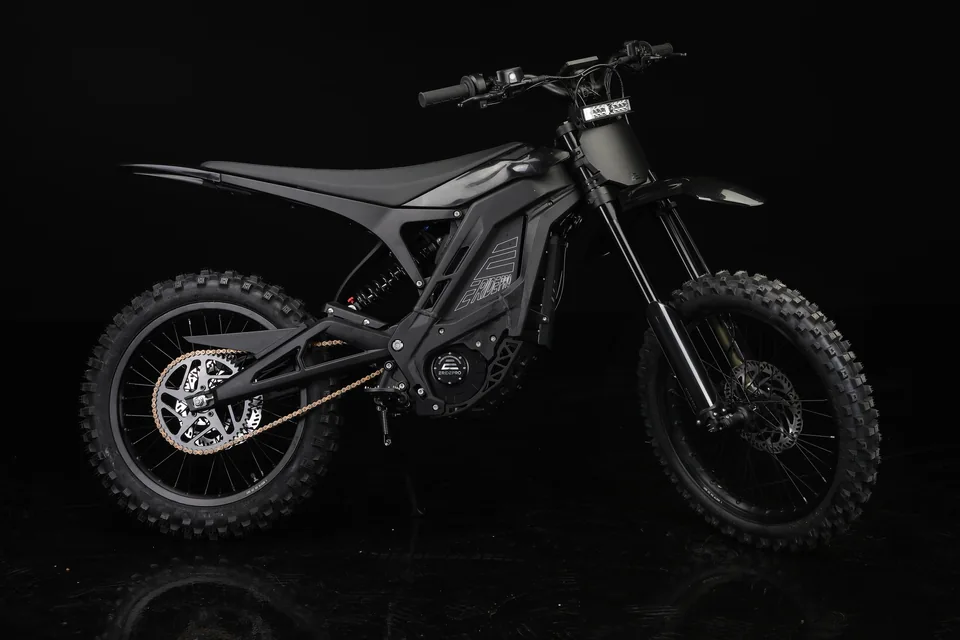
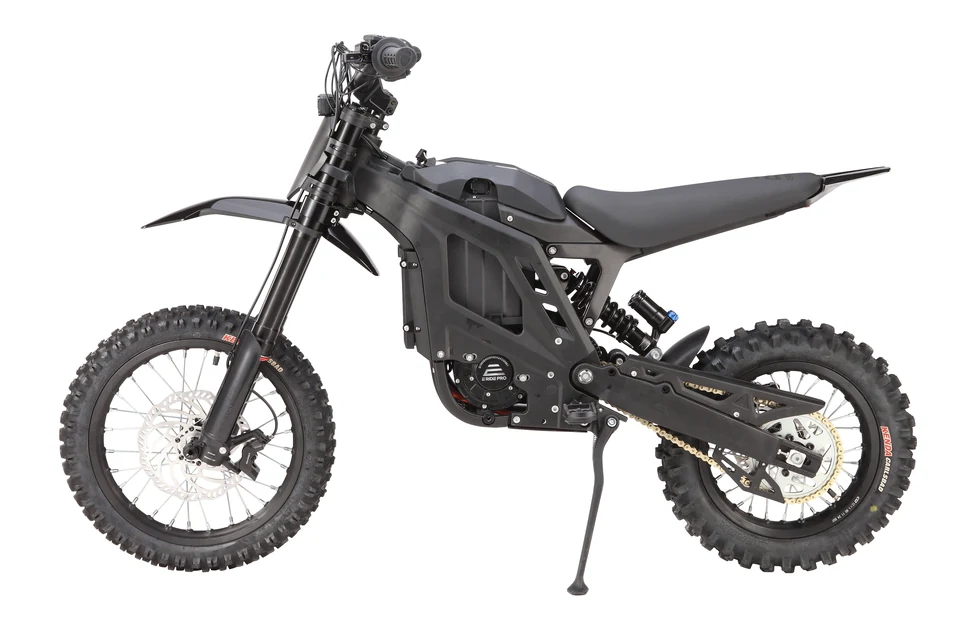
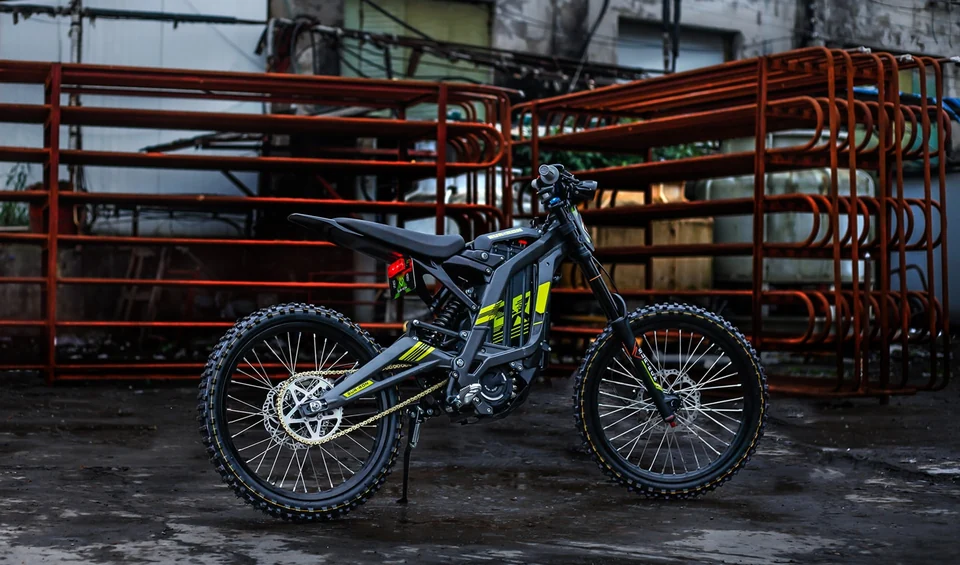
Plein Watt Moto / Comparisons
E Ride Pro SS 3.0 vs PRO 4.0: what actually changes?
Checked
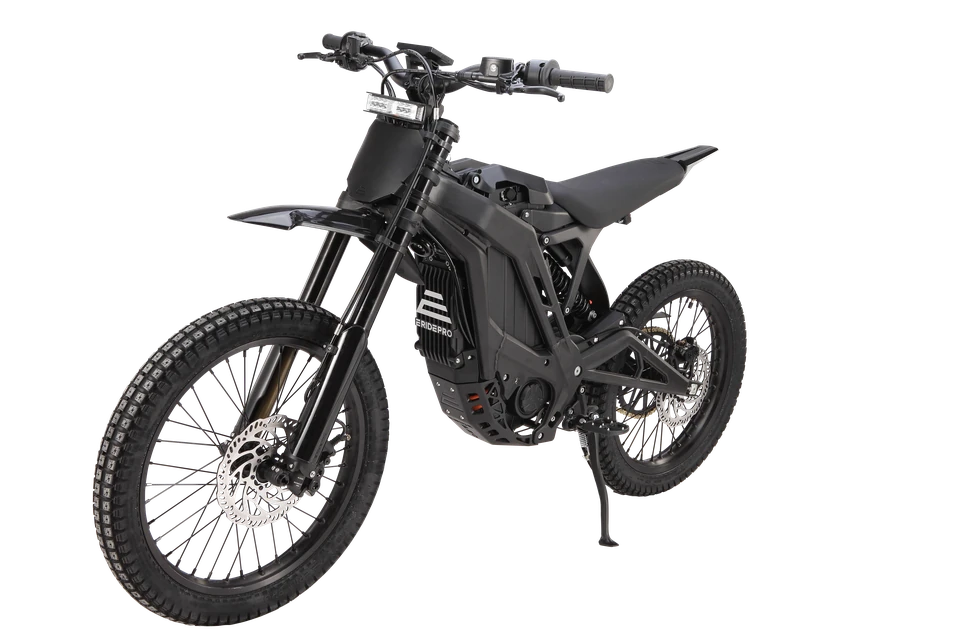
US off-road SS 3.0 and PRO 4.0 share a 3.6 kWh battery. Compare their differences without treating the US PRO 4.0 as a European road-approved SS 4.0.
US configurations compared
| Criterion | PRO SS 3.0 | PRO 4.0 |
|---|---|---|
| Rated / peak output | 6 / 15.8 kW | 7 / 18 kW |
| Battery | 72 V · 50 Ah · 3,600 Wh | 72 V · 50 Ah · 3,600 Wh |
| Listed weight | 167 lb ≈ 75.8 kg | 161 lb ≈ 73.0 kg |
| Reference seat height | 830 mm | 830 mm |
| Front / rear wheels | 19 / 18″ | 19 / 18″ |
US off-road PRO 4.0: do not treat these specifications as those of the European road-approved SS 4.0.
Similar names require precise references
This comparison covers the PRO SS 3.0 and PRO 4.0 on E Ride Pro’s official US pages, checked November 11, 2026. It does not describe the L1e/L3e road-approved SS 4.0 offered in some European markets. Sharing “4.0” in the name does not establish identical batteries, software, brakes or documents.
When choosing between these US versions, start with the comparable reference points: nominal battery capacity and the basic riding dimensions. Then consider whether the claimed changes address a specific need, rather than assuming the newest name is automatically the answer.
The main change is not a larger battery
The specifications give the same voltage, amp-hour capacity and nominal energy. On those figures, moving from the SS 3.0 to the PRO 4.0 does not buy more kilowatt-hours. Wear, temperature and charging conditions can also change the usable energy of an individual battery.
The PRO 4.0 lists higher rated and peak output. That describes an increase in the power system’s capacity; it does not translate directly into the same percentage gain in acceleration or range. Electronic control, grip and throttle use influence the outcome.
Both pages describe charging over the same partial battery interval. This must not be presented as a zero-to-full charging time. Before buying, identify the included charger and the supply it requires where the bike will be used.
Compare the delivered equipment line by line
The current PRO 4.0 page lists a lower weight than the SS 3.0. Treat that as a documentary reference: confirm the weight of the offered setup and whether the measurement includes its battery. Seat variants, wheels and model-year changes can make two advertisements difficult to compare.
Ask for the exact brakes and suspension, available adjustments and shared service parts. The cost and lead time of a consumable can matter more in ownership than a component described as newer. Footage of an earlier generation does not confirm these details.
Upgrade or keep your SS 3.0?
If your SS 3.0 suits your riding position, terrain and pace, these figures alone do not establish a need to replace it. First identify what actually limits you: setup, maintenance, ergonomics or a defined power requirement. That can prevent an expensive change which fails to address the original problem.
For a first purchase, compare offers for the same version and market, with a clear list of included equipment. A road-approved European offer needs its own specifications. This guide explains the US off-road range’s development; it does not certify administrative or technical equivalence with a European SS 4.0.
Sources and method
Documentary comparison prepared November 11, 2026 from the cited official US E RIDE PRO pages. US off-road versions; no equivalence to European L1e/L3e models is assumed. Weight conversions are rounded. Assessments interpret the specifications; this publication has not performed a riding test.